Featured
Table of Contents
SEM success needs continuous refinement. Qdexi Technology's SEM professionals keep an eye on campaign efficiency daily, making data-driven modifications to improve click-through rates, conversion rates, and total ROI. Clients take advantage of transparent reporting that describes essential metrics and campaign insights. Qdexi Innovation believes in clear interaction and cooperation, making sure clients are informed about the effect of their SEM financial investment.
Qdexi Innovation sticks out as a reputable partner for companies looking for efficient SEM services, offering know-how in search marketing services tailored to maximise ROI and accomplish business development in the competitive digital landscape. By leveraging SEM's capabilities, companies can not only enhance their online existence but likewise cultivate a stable stream of certified leads and conversions.
For services wanting to harness the power of SEM and partner with a relied on search marketing business, Qdexi Innovation offers an extensive suite of services designed to provide tangible results and promote long-term company growth in the digital age.
Refining Keyword Strategies for Lower CPC
Eventually, the greater a brand name's advertisements appear or rank on search engines, the higher the possibilities are that those advertisements are being seen by audiences. Furthermore, SEM can be a crucial way for marketers to drive traffic to websites, landing pages, and product pages through SERPs.
Online marketers can also use paid search, contextual marketing, and organic search rankings to increase site visibility. When it concerns paid ads, SEM can provide better click-through rates (CTR) and greater conversions than other passive kinds of marketing. And its PPC model allows services to quickly tailor campaigns, permitting brand names to concentrate on particular keywords to help reach pertinent audiences.
Online search engine marketing (SEM) is a digital marketing strategy utilized to increase the exposure of a site in online search engine results pages (SERPs). While the industry term once described both organic search activities such as search engine optimization (SEO) and paid, it now refers almost exclusively to paid search marketing.
With an increasing number of consumers researching and looking for products online, search engine marketing has become a vital online marketing method for increasing a company's reach. In reality, most of brand-new visitors to a website find it by performing a query on a search engine. In online search engine marketing, advertisers just spend for impressions that lead to visitors, making it an effective way for a business to invest its marketing dollars.
Key KPIs for Measuring Paid Impact
Since consumers enter search queries with the intent of finding details of a business nature, they remain in an outstanding mindset to buy, compared to other websites such as social networks where users are not explicitly browsing for something. Browse marketing reaches consumers at precisely the correct time: when they are open to brand-new info.
Results are immediate with SEM. It is arguably the fastest way to drive traffic to a website. While SEO strategy relies greatly on content marketing to drive natural traffic, SEM technique relies heavily on targeted advertisements to drive paid traffic. Online search engine utilize complicated algorithms to guarantee the most pertinent results are returned for each search, consisting of location and other offered details.
Let's state that you are a consumer trying to find a service or product online. You go to an online search engine and key in your search terms (also referred to as keywords). In your search results page, you will stumble upon numerous business ads whose keywords match the keywords in your search.
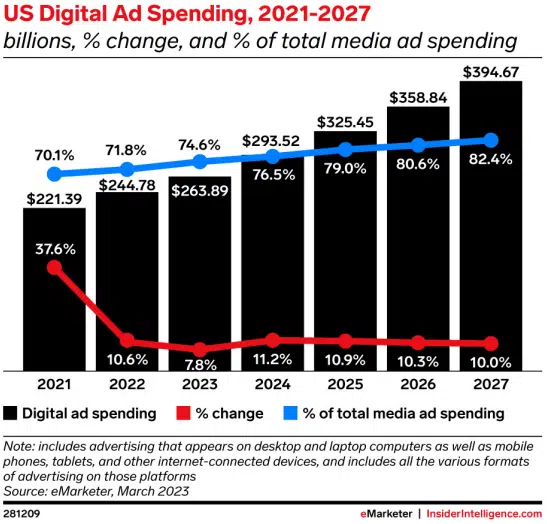
The paid listings are extremely relevant to your specific search, making it likely that you will click on them. Now let's take a look at how SEM campaigns work from the marketer's perspective. SEM networks are self-serve operations. Once a marketer selects a network, they can get a campaign up within a brief duration of time.
Future Trends in Smart PPC Optimization
Online marketers enter a heading, text for the body of the ad, a call-to-action and a URL for the hyperlink. Search engine marketing is considered by numerous to be the most efficient way to invest marketing dollars. The 2 primary search networks that SEM specialists target are Google Ads (formerly Google Adwords) and the Bing Advertisements.
The first network consists specifically of search-related sites owned by Google, while the second includes properties such as YouTube, Blog Writer and Gmail. The Bing Advertisements allows consumers to buy ads on both Yahoo's network of sites and Bing's network. While Google Ads is a much bigger network (around 2x the size), the rates is frequently lower on Bing Advertisements.
Polishing Existing Paid Campaigns for EfficiencyStart by carrying out fundamental keyword research to discover appropriate keywords utilizing tools like Google's Keyword Planner, SEMrush, or Ahrefs. When attempting to identify particular keywords, attempt to find ones that are within the sweet area of search volume (not too high as they'll be too costly, and not too low as they might not have sufficient interest).
Banner Creative Design Best Practices for Higher ROI
PPC campaigns are normally structured around main themes or topics that are tied to specific organization results. They are consisted of subsets of ad groups which are further broken down into individual advertisements. When it concerns paid ad spend, companies are generally including numerous products they're selling with different objectives tied to each product, as advertisement targeting through paid search is a lot more granular.
Once you've developed your projects and your advertisement groups, it's time to produce ad copy that speaks directly to prospective customers. A lot of types of SEM will allow you to create headlines, descriptions, and ad extensions. Start with compelling headlines that truly speak with the search intent behind the keywords you're targeting.
Ad extensions are an efficient way to optimize your advertisements with pertinent content that enhances the user experience. Some examples of ad extensions are sitelinks, contact number, callouts, structured bits, and in many cases, user rankings. Guarantee your landing pages relate to the advertisement copy that got your users there in the very first location.
Some easy ways to enhance your landing pages is to include clear calls-to-action (CTA), execute responsive design for mobile users, optimize page speed, and quality material. Before entering into budget plan allocation, you'll require to begin running ads in order to determine which bidding strategy yields the best results for you.
Key Advantages of AI PPC Tools
Automated bidding can be rather resource extensive, so for small companies, it's better to begin with manual bidding to gather information. For bigger business with more resources, they might want to skip ahead to automated bidding because it's more likely to yield clicks at a higher cost. As soon as your ad platform has actually collected adequate information with time, you can then fine-tune your quote strategy to represent different sections such as devices, locations, time of day, and even client affinity.
For example, numerous B2B companies select to assign most of their budget plan to serving ads to desktops throughout working hours as there's a higher possibility of conversion. There are lots of ways to improve the overall efficiency of your advertisements when you have your campaigns running. Enhance quality rating to lower the overall cost of advertisements appearing.

Latest Posts
Polishing Your Search Accounts for Efficiency
New Ideas to Effectively Fund Youth Wellness Outcomes
Where to Distribute Total Ad Spend Effectively